
For years, retirement was talked about as a finish line.
You worked hard, built a career, raised a family, saved what you could, and eventually reached the point where you could finally step away.
But I’ve found that retirement doesn’t always feel like an ending.
For many people, it feels more like a question:
What do I want this next chapter of my life to look like?
Maybe you’re ready to leave the corporate schedule behind, but you’re not ready to stop using the skills you spent decades developing. Maybe you want more freedom to travel or spend time with family, but you also enjoy being productive and connected to something meaningful.
Or maybe, for the first time in a long time, you have the opportunity to build something on your own terms.
That’s where franchise ownership can be worth exploring.
Not because everyone who retires should buy a franchise. They shouldn’t.
But for the right person, with the right goals and the right business model, franchising can offer an interesting combination of independence, structure, purpose, and flexibility.
And finding out whether it fits you should always come before finding a franchise.
Why Franchising Can Make Sense in a New Season of Life
One of the things I appreciate about franchising is that you don’t have to invent the business from scratch.
When you start an independent business, you’re responsible for creating the brand, developing processes, figuring out marketing, testing systems, finding vendors, and learning through a lot of trial and error.
A franchise gives you a different starting point.
You own the business, but you’re operating within an established system. The franchisor has developed the brand, processes, training, operating procedures, and support structure that franchisees use to build their individual businesses.
That doesn’t remove the responsibility of ownership.
It does give you a roadmap.
And at a stage of life when you may be more interested in making a thoughtful decision than proving you can reinvent the wheel, that structure can be very valuable.
You May Be More Prepared Than You Think
One concern I sometimes hear from people considering franchising later in their careers is, “But I’ve never owned a business before.”
That may be true.
But I always want to know what you have done.
Have you managed people?
Led projects?
Worked with budgets?
Solved problems when there wasn’t an obvious answer?
Built relationships with customers, employees, coworkers, or vendors?
Made difficult decisions?
Learned how to communicate with different personalities?
Those skills matter.
In fact, one of the biggest misconceptions about franchising is that you need to come from the same industry as the franchise you eventually own.
Often, what matters more is whether your strengths match the role of the owner and whether you are willing to learn and follow a proven system.
You may be entering a new industry, but you’re not starting over as a person.
You’re bringing decades of experience with you.
Start With the Life You Want, Not the Brand You Recognize
This is where I believe franchise exploration sometimes gets backward.
People start browsing franchise brands and asking, “Which one should I buy?”
I would rather begin with another question:
What do you want your life to look like?
Do you want to work every day because you enjoy being involved?
Would you rather hire a manager and focus on leadership and oversight?
How important is travel?
How much time do you want available for grandchildren, family, hobbies, volunteering, or other priorities?
Do you enjoy managing employees?
Would you rather build relationships and grow a business than handle day-to-day operations?
There are owner-operated franchises. There are models designed to be manager-run. There are service businesses without a traditional storefront, and there are brick-and-mortar businesses that require a very different level of staffing and operational involvement.
None of these models is automatically “better.”
The question is whether the model matches the life you are trying to create.
I don’t want someone to buy a business and discover six months later that they’ve simply traded one demanding job for another one they like even less.
Lifestyle alignment matters.
Be Especially Thoughtful About the Financial Side
Whenever someone is considering business ownership, the numbers matter.
When retirement savings are involved, they deserve even more careful attention.
The franchise fee is only one part of the investment. Depending on the business, there can also be equipment, real estate, staffing, insurance, marketing, technology, working capital, royalties, and other operating expenses.
This is one reason the Franchise Disclosure Document, or FDD, is such an important part of the investigation process.
Don’t skim it.
Don’t treat due diligence like something standing between you and the exciting part.
Due diligence is the important part.
There are also several ways people may choose to fund a franchise, including traditional business financing and certain retirement-fund strategies. Those choices can have significant financial, legal, and tax consequences, so this is an area where qualified financial, tax, and legal professionals should be part of the conversation.
The goal should never be to figure out the maximum amount you can invest.
The better question is what level of investment makes sense for your overall financial picture, your risk tolerance, and your plans for this stage of life.
A good opportunity still has to be a good opportunity for you.
There Is No Such Thing as Completely Passive Franchise Ownership
The phrase “semi-absentee” or “manager-run” gets a lot of attention, especially from people who want more flexibility.
Those models do exist.
But I think it’s important to set realistic expectations.
Business ownership still requires ownership.
Even with a strong manager, someone has to understand the financials, monitor performance, hire and lead well, make strategic decisions, and hold people accountable.
The right manager-run franchise may give you significantly more flexibility than an owner-operator model, but it shouldn’t be confused with putting money into an investment and forgetting about it.
That’s why we spend so much time talking about desired involvement during the franchise exploration process.
You need to understand not only what the business sells, but what your job as the owner will actually be.
Validation Is Where the Business Becomes Real
One of my favorite parts of the franchise investigation process is validation.
That’s when you speak with existing franchise owners.
You get to move beyond presentations and marketing materials and ask real people what ownership looks like.
What surprised them?
What does a normal week look like?
How strong was the training?
How responsive is the franchisor?
What has been harder than expected?
What do they wish they had understood before opening?
Would they make the same decision again?
Those conversations can be incredibly valuable because they help you compare what you imagined ownership would look like with what franchisees are actually experiencing.
Then you continue gathering information, reviewing the FDD, understanding the economics, learning about the franchisor’s culture and support, and eventually meeting the leadership team through Discovery Day or the franchisor’s equivalent.
This is not a process that should be rushed.
The goal isn’t simply to get to “yes.”
Sometimes the right answer is no.
That is still a successful investigation because you learned enough to make an informed decision.
The Right Franchise Should Fit the Chapter You’re Entering
Mack and I understand what it feels like to look at your life and realize you’re ready for something different.
Our path into franchising came after careers in ministry and education. We had experience. We had responsibilities. We had a family. And we weren’t interested in simply making a change for the sake of making a change.
We wanted to understand what could give us greater flexibility and allow us to build something together.
Franchising became part of that story for us.
But our experience also taught us something important: choosing a franchise isn’t simply about selecting a recognizable brand or a popular industry.
It’s about alignment.
Your skills.
Your financial goals.
Your family.
Your desired schedule.
Your leadership style.
Your tolerance for risk.
Your reasons for wanting business ownership in the first place.
Those pieces form the model we use when helping someone explore franchise opportunities.
Because there are a lot of good franchises.
That doesn’t mean they are all good franchises for you.
You Don’t Have to Know the Answer Before You Start Exploring
If you’re approaching retirement—or already there—and wondering whether business ownership could be part of your next chapter, you don’t need to decide today that you want to become a franchise owner.
Start with questions.
Get educated.
Learn what different ownership models actually require.
Think carefully about how you want to spend your time.
Understand your investment comfort zone.
Talk with people who are already doing it.
Then decide.
Smart decisions are rarely the result of moving faster. They come from having better information and enough clarity to know why you’re making the decision.
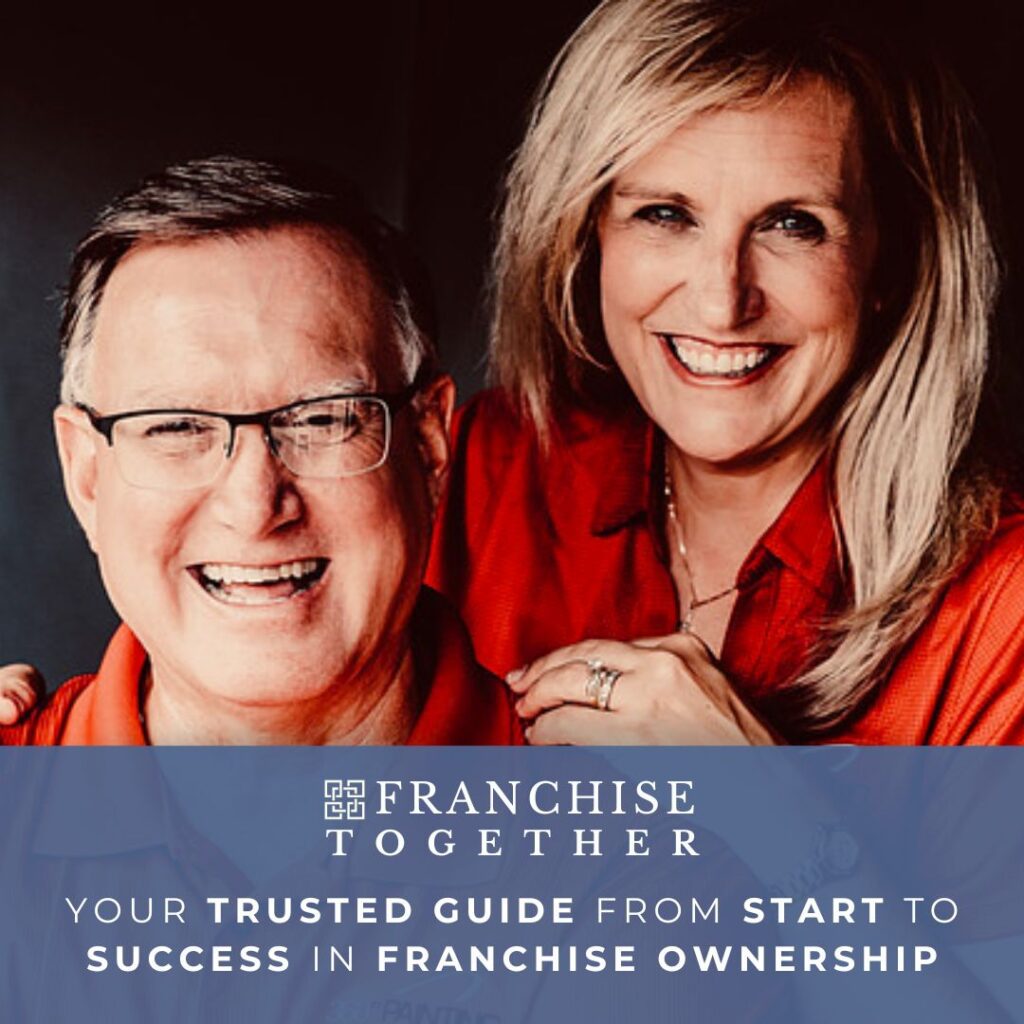
That’s exactly what Mack and I help people do at Franchise Together.
Our consulting service is provided at no cost to you, and there is no obligation to buy a franchise. We start by getting to know you, understanding what you want this next chapter to look like, and then determining whether franchising—and which type of franchising—is worth exploring.
Retirement may be the end of one career.
It doesn’t have to be the end of meaningful work, growth, contribution, or building something you’re proud of.
Maybe your next chapter looks like slowing down.
Maybe it looks like building something new.
The important thing is making sure it looks like you.
If you’re curious about whether franchise ownership could fit the life you’re planning, let’s talk. We’ll help you explore your options, ask the right questions, and decide what makes sense for you—at your own pace and without pressure.
How We Help You Get Started:
At Franchise Together, we help aspiring entrepreneurs and professionals confidently explore franchise ownership. Through personalized guidance, education, and curated opportunities, we support you in finding a business that aligns with your goals, lifestyle, and financial vision.
Why Work With Us:
As a husband-and-wife team, we combine real-world franchise ownership experience with a passion for helping others succeed. We’ve been in your shoes navigating decisions, evaluating opportunities, and building businesses so we understand both the challenges and the possibilities. Our approach is hands-on, relationship-driven, and focused on helping you make informed, confident decisions.
Our Proven Process:
We take the time to understand your goals, background, strengths, and ideal lifestyle. From there, we guide you through a structured discovery process—introducing you to pre-screened franchise opportunities that match your vision and provide a realistic path to long-term success. Our role is to simplify the journey and give you clarity every step of the way.
Expert Guidance At No Cost To You:
Our services are free to you. We’re compensated by franchise partners for connecting them with qualified candidates, so you get expert guidance, insights, and support without paying out of pocket.
The Next Right Step:
If you’re curious about exploring franchising as a career pivot, investment vehicle or lucrative side hustle, let’s talk! You can book a free no obligation call with Mack or a free no obligation call with Sharon.