
When most people think about franchising, they picture familiar signs along the highway, well-known restaurant brands, or businesses they see in their own communities.
But franchising is much bigger than a collection of recognizable logos.
At its core, franchising is about taking a successful way of doing business, creating a system around it, and giving other people the opportunity to operate within that system.
And that idea has been developing for a very long time.
Understanding a little of the history can actually help you understand one of the biggest reasons people are drawn to franchising today: you’re not necessarily starting with a blank sheet of paper.
The Idea Behind Franchising Goes Back Centuries
The word “franchise” has roots in the Anglo-French word franc, meaning “free.”
Long before anyone talked about franchise agreements, Franchise Disclosure Documents, or Discovery Days, versions of the franchise concept were already taking shape.
During the Middle Ages, landowners sometimes granted individuals the right to conduct certain activities on their land, such as operating markets, holding fairs, or using particular resources. Those rights came with rules and responsibilities.
It certainly wasn’t franchising as we understand it today, but the underlying concept is familiar: someone grants another person the right to conduct business within an established framework.
Over time, that basic idea became much more sophisticated.
Singer Helped Introduce Franchising to America
One of the important milestones in modern American franchising came in the 1850s through Isaac Singer and the Singer Sewing Machine Company.
Singer faced a challenge many growing businesses still understand today.
He wanted to expand distribution of his sewing machines, but growth required capital. There was another problem, too: these machines weren’t products customers could simply take home and immediately understand. People needed instruction.
Singer developed a licensing arrangement that allowed individuals to sell his machines within specific geographic territories. Those licensees also helped customers learn how to use the product.
That arrangement gave Singer a way to expand without personally operating every location or handling every customer interaction himself.
Sound familiar?
Many aspects of modern franchising have become far more structured since then, but the principle remains important: create a repeatable model, equip other people to execute it, and expand through a shared system.
After World War II, Franchising Began to Take Off
The version of franchising most of us recognize today—often called business-format franchising—grew rapidly following World War II.
America was changing. Communities were expanding, consumer demand was growing, and businesses needed effective ways to serve new markets.
Business-format franchising offered an answer.
Instead of simply licensing a product or name, a franchisor could provide franchise owners with an entire operating model. That could include branding, processes, training, systems, marketing, and ongoing support.
That distinction matters.
When someone invests in a franchise today, they generally aren’t paying simply for permission to put a recognizable name on the building. They are evaluating an entire business system.
And when we work with prospective franchise owners, that system is one of the most important things we encourage them to investigate.
What training is provided?
What support exists after opening?
What do existing franchisees say?
How repeatable is the model?
What does the franchisor expect from the owner?
The brand name might get your attention. The system behind the brand is what deserves your due diligence.
Then Came the Golden Arches
No conversation about the growth of franchising would be complete without talking about McDonald’s.
In 1954, Ray Kroc encountered the McDonald brothers’ hamburger restaurant in San Bernardino, California. What caught his attention wasn’t simply the food. It was the system.
The restaurant had developed a highly efficient process designed to deliver consistent results quickly.
Kroc saw the possibility of reproducing that model in other locations and began recruiting franchisees. He later purchased the McDonald brothers’ interest in the company, and McDonald’s eventually became one of the most recognized examples of franchising in the world.
There’s an important lesson here that goes beyond hamburgers.
Strong franchise systems are built around repeatability.
Can the processes be taught?
Can another owner follow the system?
Can customers receive a reasonably consistent experience from one location to another?
That doesn’t mean franchise ownership is automatic or effortless. Franchisees still have to lead, manage people, understand their market, follow the system, and execute well.
But they are doing those things within a model someone else has already spent time developing.
For the right person, that can be a very attractive alternative to creating every system from scratch.
Growth Also Created the Need for Greater Transparency
As franchising expanded, so did the need for industry standards and protections for prospective franchise owners.
The International Franchise Association was founded in 1960 and became an important organization representing participants throughout the franchise industry.
Federal regulation also became a major part of the franchise landscape.
In 1978, Federal Trade Commission requirements established disclosure rules that ultimately led to what prospective owners today know as the Franchise Disclosure Document, or FDD.
If you’re exploring franchise ownership, you’ll become very familiar with those three letters.
The FDD contains extensive information about a franchise system, including the company’s history, leadership, certain litigation and bankruptcy disclosures, fees, estimated investment requirements, franchisee information, and many other details.
We sometimes tell people that investigating a franchise can feel a little like learning a new language.
That’s okay.
You don’t need to know everything on day one.
You do need to be willing to learn, ask good questions, review the information carefully, and surround yourself with appropriate professional advisors.
The FDD is not something we believe you should rush through just so you can get to the “exciting” part of becoming an owner.
Due diligence is part of the exciting part—because clarity is what helps you make a confident decision.
Why This History Still Matters Today
You might be wondering, “That’s interesting, but what does a sewing machine company from the 1850s have to do with whether franchising is right for me?”
Quite a bit, actually.
The story of franchising is really the story of systems.
Businesses learned how to take processes that worked, document them, teach them to other people, and replicate them across new markets.
That is still one of the fundamental reasons people investigate franchise ownership.
You may want to own a business without having to invent the business model yourself.
You may value training and support.
You may prefer having other franchise owners you can speak with before making your decision.
You may appreciate having operating procedures, brand standards, marketing resources, technology, vendor relationships, and other infrastructure already in place.
But here’s something we believe strongly: the existence of a system doesn’t automatically make it the right system for you.
There are many franchise opportunities, representing different industries, investment levels, ownership models, cultures, schedules, staffing requirements, and growth strategies.
The question isn’t simply:
“Is franchising a good idea?”
A much better question is:
“Is there a franchise model that fits the life and business I’m trying to build?”
That takes us beyond history and into something much more personal.
Your Franchise Journey Should Start With You
One of the things we appreciate about franchising is that it gives people options.
But more options don’t necessarily make a decision easier.
In fact, they can make it overwhelming.
That’s why our process at Franchise Together begins with understanding you before we start talking about brands.
What do you want your life to look like?
What role do you want to play in the business?
What are your financial goals?
How much flexibility matters to you?
What are your strengths?
What kinds of responsibilities do you enjoy—and which ones would you rather avoid?
Those questions help us build a picture of the business model you should be looking for.
From there, we can explore potential franchise matches, conduct due diligence, review the FDD, speak with existing owners through validation calls, meet the franchisor, and gather enough information for you to make your own informed decision.
Franchising has evolved tremendously over the centuries.
But in our view, the most important part of the process hasn’t changed: good business decisions require the right information, the right questions, and the willingness to determine whether an opportunity truly fits.
You don’t need to rush.
You don’t need to figure it all out alone.
And you certainly don’t need to choose a franchise simply because the name is familiar.
You need clarity.
If franchise ownership has been on your mind and you’d like to understand what the process actually looks like, we’d be glad to walk through it with you.
Our consulting services are provided at no cost and with no obligation. Let’s talk about what you want your next chapter to look like—and whether franchising might help you live a better story.
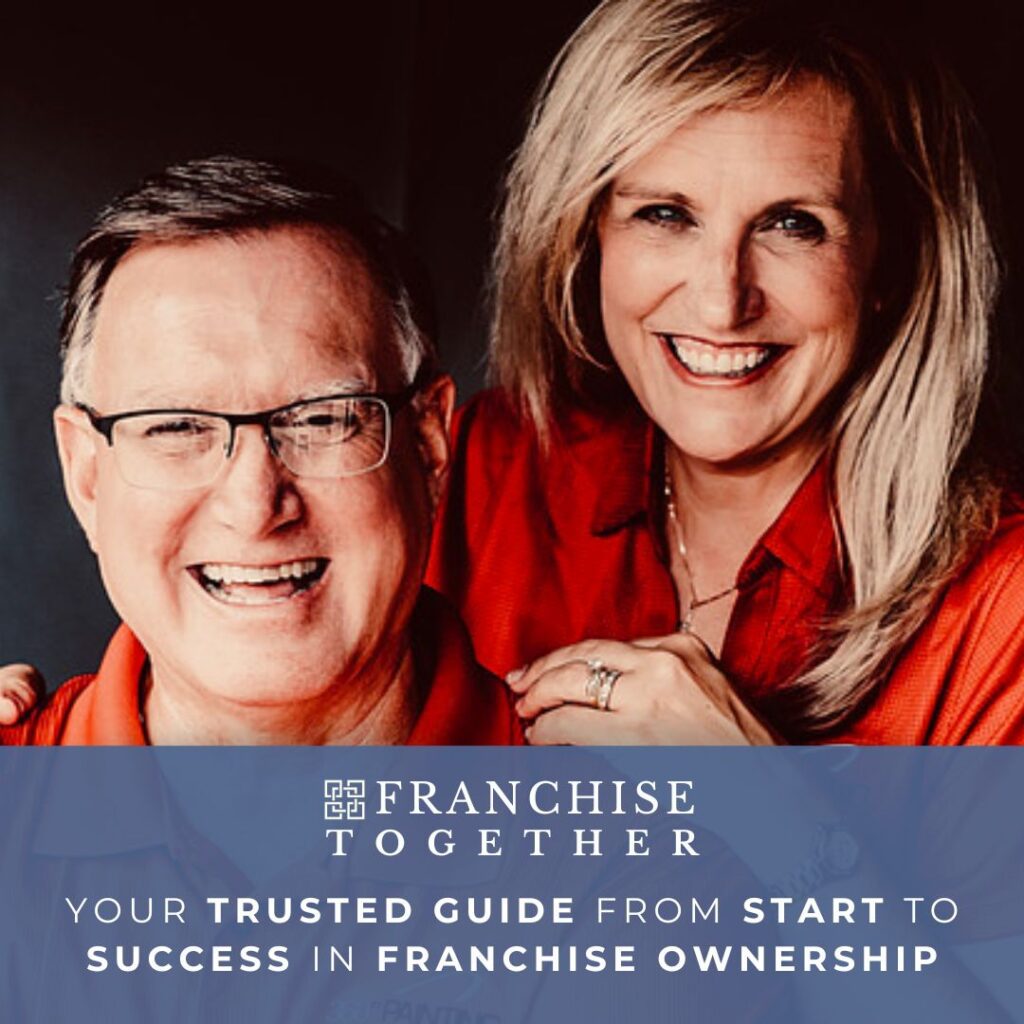
How We Help You Get Started:
At Franchise Together, we help aspiring entrepreneurs and professionals confidently explore franchise ownership. Through personalized guidance, education, and curated opportunities, we support you in finding a business that aligns with your goals, lifestyle, and financial vision.
Why Work With Us:
As a husband-and-wife team, we combine real-world franchise ownership experience with a passion for helping others succeed. We’ve been in your shoes navigating decisions, evaluating opportunities, and building businesses so we understand both the challenges and the possibilities. Our approach is hands-on, relationship-driven, and focused on helping you make informed, confident decisions.
Our Proven Process:
We take the time to understand your goals, background, strengths, and ideal lifestyle. From there, we guide you through a structured discovery process—introducing you to pre-screened franchise opportunities that match your vision and provide a realistic path to long-term success. Our role is to simplify the journey and give you clarity every step of the way.
Expert Guidance At No Cost To You:
Our services are free to you. We’re compensated by franchise partners for connecting them with qualified candidates, so you get expert guidance, insights, and support without paying out of pocket.
The Next Right Step:
If you’re curious about exploring franchising as a career pivot, investment vehicle or lucrative side hustle, let’s talk! You can book a free no obligation call with Mack or a free no obligation call with Sharon.