
What does “turnkey” really mean in franchising, and how much of the work is actually done for you?
Imagine buying a business where many of the big decisions have already been made. The systems are developed, the brand is established, the training is organized, and there’s a team ready to help you get started.
Sounds pretty appealing, doesn’t it?
For someone considering business ownership for the first time, that kind of structure can be reassuring. After all, one of the reasons people are drawn to franchising is the opportunity to own a business without having to figure out every detail from scratch.
But here’s something we’ve learned from our own experience as franchise owners and from helping others explore franchising:
Just because a business is described as “turnkey” doesn’t mean it’s completely hands-off.
And understanding that distinction before you invest can make a big difference.
Let’s talk about what a turnkey franchise actually is, what it may offer, and how to determine whether it’s the right fit for you.
What Exactly Is a Turnkey Franchise?
Think about the difference between building a house from the ground up and purchasing one that’s move-in ready.
When you build, you’re involved in countless decisions. You coordinate contractors, select materials, manage timelines, and oversee the process.
When you purchase a move-in-ready home, much of that work has already been completed.
A turnkey franchise works on a similar principle.
Depending on the franchise system, the franchisor may help with site selection, facility development, equipment, inventory, employee training, marketing, and other pieces necessary to get your business open.
Instead of creating everything yourself, you’re stepping into a business model with established systems and support.
That’s one of the things we appreciate about franchising. You get the opportunity to be a business owner while benefiting from the experience and infrastructure of an established organization.
But there’s an important detail to understand.
Not every franchise that uses the word “turnkey” offers the same level of support.
Turnkey Doesn’t Always Mean Everything Is Done for You
This is where we encourage people to slow down and ask good questions.
Some franchises offer a fairly comprehensive startup package. Others provide what might be better described as a partially turnkey experience.
For example, a franchisor might help you identify a location but expect you to negotiate the lease. They may provide equipment specifications but leave purchasing and installation to you. They might offer hiring guidance while making you responsible for recruiting and building your team.
None of those arrangements is necessarily a bad thing.
The important question is whether you understand what you’re agreeing to.
We often remind our clients that there’s a difference between what a franchise provides, what it supports, and what it expects you to do yourself.
Those distinctions matter because they affect your investment, your time, and your responsibilities as an owner.
The goal isn’t simply to find a franchise that does the most for you. It’s to find one whose responsibilities and support structure align with how you want to operate your business.
The Real Value of a Turnkey Franchise
When someone tells us they’re interested in a turnkey business, we like to explore what’s motivating that interest.
Are they looking to simplify the startup process? Are they concerned about entering an industry where they have little experience? Do they want to continue working in their current career while establishing a business? Or are they simply looking for more guidance and structure?
Those are different goals, and they don’t necessarily lead to the same franchise model.
A well-designed turnkey package may offer meaningful advantages, including established operating procedures, vendor relationships, training programs, brand standards, equipment recommendations, and startup assistance.
For someone transitioning from a corporate career or exploring business ownership for the first time, these resources can help make an unfamiliar process more manageable.
But the value isn’t just in what’s included.
It’s in whether those services genuinely meet your needs.
Sometimes paying for additional startup assistance makes sense. Other times, an owner may prefer to take responsibility for certain tasks and potentially reduce costs.
Neither approach is automatically better.
It comes down to understanding the business model and knowing yourself.
What Are You Really Paying For?
Here’s a question we believe every prospective franchise owner should ask:
Am I paying for meaningful support, or am I paying a premium for convenience I may not actually need?
Turnkey packages can involve significant upfront investment, and it’s important to understand exactly how that money is being spent.
For example, you may be paying for equipment, inventory, location development, training, installation, or other startup services.
You also need to understand which costs are included in the initial investment and which expenses may arise separately.
This is one of the reasons we place so much emphasis on reviewing the Franchise Disclosure Document, commonly called the FDD.
The FDD provides important information about the franchise opportunity, including initial fees, estimated investment requirements, ongoing obligations, and other details that deserve careful consideration.
We encourage clients to review these documents thoroughly and consult qualified franchise legal and financial professionals before making an investment decision.
We also want people to understand that purchasing a franchise doesn’t eliminate the financial responsibilities of business ownership.
You may still need working capital, payroll funds, marketing resources, and a financial cushion while the business develops.
The more clearly you understand those obligations on the front end, the better prepared you’ll be to make a thoughtful decision.
One of the Best Sources of Information? Other Franchise Owners.
There’s something we tell people regularly during the franchise investigation process:
Don’t just listen to what a franchise company says it will provide. Talk with the people who have actually experienced it.
This is called franchisee validation, and we believe it’s one of the most valuable parts of evaluating a franchise opportunity.
When you’re researching a turnkey model, current franchise owners can help you understand how the startup experience compares with what was promised.
Did the franchisor provide the support they expected? Were there expenses they didn’t anticipate? What challenges came up during the opening process? What would they do differently if they were starting again?
We also encourage people to ask whether the startup package was worth the investment.
These conversations can help you move beyond marketing language and understand the day-to-day realities of ownership.
No two franchise owners will have exactly the same experience, but hearing from several people can help you identify patterns and ask better questions.
That’s the kind of information that helps you make a decision with greater clarity.
Does Turnkey Mean You Can Keep Your Day Job?
This is another important distinction.
Some people hear the word “turnkey” and assume the business will require very little involvement once it opens.
But turnkey and semi-absentee ownership are not the same thing.
A turnkey franchise generally refers to the preparation and support involved in launching the business.
A semi-absentee or manager-run franchise refers to an operating model in which the owner may delegate certain daily responsibilities to a manager or team.
A franchise can be turnkey without being suitable for semi-absentee ownership. And a franchise designed for manager-run operation may still require substantial work during startup.
If your goal is to maintain your current career while building a business, you’ll want to investigate the actual time commitment, staffing requirements, financial resources, and ongoing leadership responsibilities.
Even with a manager in place, you remain responsible for the business.
This is why we spend time helping clients define what they want ownership to look like before we start matching them with franchise opportunities.
The right business needs to fit more than your financial qualifications.
It also needs to fit your lifestyle, your strengths, and the role you want to play.
What Turnkey Franchising Can’t Do for You
When we purchased our own painting franchise, we were stepping into an industry that wasn’t our professional background.
Sharon came from education, and Mack had spent decades in ministry.
We weren’t experienced painting contractors.
But we did bring leadership experience, a willingness to learn, and a commitment to following the business model.
And we had the benefit of guidance as we explored franchise ownership.
Our experience taught us something that continues to shape how we work with clients today.
You don’t necessarily need years of experience in a particular industry to become a franchise owner. But you do need to understand the responsibilities of ownership and be willing to do the work.
A franchisor may provide training, systems, marketing tools, vendor relationships, and operational guidance.
What it cannot provide is your personal commitment.
It can’t make every decision for you, build every relationship, or lead your team on your behalf.
Even a business that arrives with many of its startup pieces in place still needs an engaged owner who is willing to learn, lead, and hold the business accountable.
That’s why we encourage people to look beyond the convenience of a franchise package and think seriously about the kind of owner they want to become.
The Bigger Question: Is This the Right Franchise for You?
We talk with people from all kinds of professional backgrounds.
Some have spent decades in corporate leadership. Others are considering a career change, planning their next chapter, or exploring business ownership alongside a spouse.
Many are attracted to franchising because they want more control over their future.
But the reasons behind that desire are personal.
For one person, it might mean building a business they can operate full-time.
For another, it might mean creating an opportunity that fits alongside an existing career.
For someone else, it may be about finding a new professional challenge or building something meaningful with their family.
There’s no single franchise model that’s right for everyone.
And that’s exactly why we don’t believe the franchise search should begin with a brand name or a promise of convenience.
It should begin with you.
What are your goals? What are your financial parameters? What skills and experiences can you bring to the business? How much time can you realistically commit? What responsibilities are you comfortable taking on?
Once we understand those answers, we can begin exploring franchise models that align with your priorities.
Sometimes that may include a turnkey opportunity.
Sometimes it may not.
The best franchise isn’t necessarily the one that looks easiest to open. It’s the one that makes sense for your life, your goals, and your abilities.
How We Help You Make Sense of the Options
When we started exploring franchising, we benefited from working with a franchise consultant who helped us consider opportunities we might not have discovered on our own.
That experience is one of the reasons we’re so passionate about doing this work today.
At Franchise Together, we take a personalized, step-by-step approach to helping people explore business ownership.
We begin by getting to know you, not by handing you a list of franchises.
Through conversations and a detailed discovery process, we help you clarify your priorities and build a picture of what an appropriate business model might look like.
From there, we introduce franchise opportunities that align with your goals, investment parameters, experience, and desired lifestyle.
Then we walk alongside you through the investigation process.
That includes understanding the business model, reviewing franchise information, preparing for conversations with franchisors, speaking with existing franchisees, and exploring the responsibilities that come with ownership.
We want you to ask the tough questions.
We want you to understand the investment.
And we want you to feel comfortable saying no to an opportunity that isn’t right for you.
Because our goal isn’t simply to help you buy a franchise.
It’s to help you make a well-informed decision about your future.
And our consulting services are always provided at no cost to you, with no obligation to move forward.
Final Thoughts: Don’t Just Look for a Business That’s Ready. Look for One That’s Right.
A turnkey franchise can be an appealing option, particularly if you value structure, startup guidance, and established systems.
But convenience alone isn’t a reason to invest.
Take time to understand what’s included, what isn’t, what the business will require of you, and whether the opportunity supports the life you’re trying to build.
Business ownership is a significant decision. It deserves more than a quick comparison of franchise packages.
We’ve been on the ownership side of that decision, and we know how valuable it can be to have someone help you ask the right questions.
If you’re exploring franchising and wondering whether a turnkey, manager-run, or another ownership model might be right for you, we’d welcome the opportunity to talk.
There’s no pressure, no obligation, and no cost for our guidance.
Just an honest conversation about your goals and what opportunities might make sense.
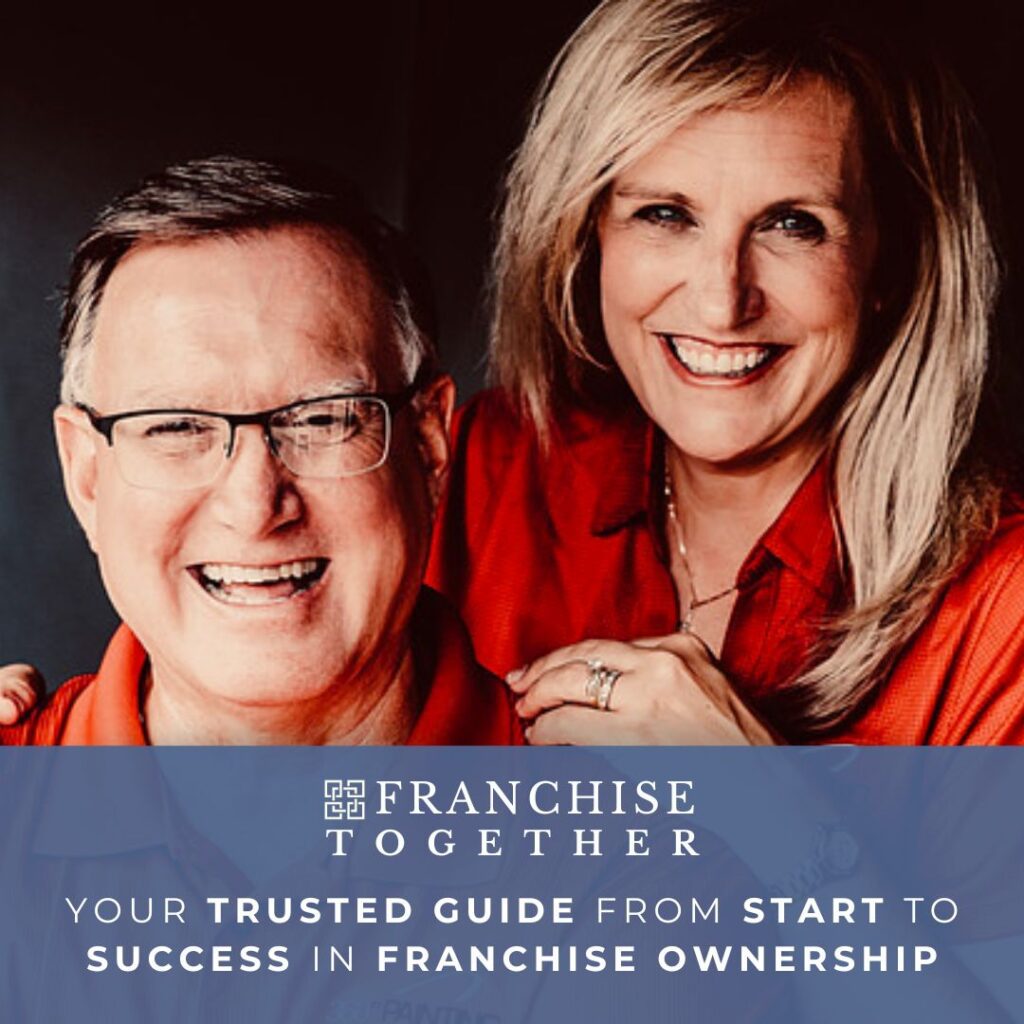
How We Help You Get Started:
At Franchise Together, we help aspiring entrepreneurs and professionals confidently explore franchise ownership. Through personalized guidance, education, and curated opportunities, we support you in finding a business that aligns with your goals, lifestyle, and financial vision.
Why Work With Us:
As a husband-and-wife team, we combine real-world franchise ownership experience with a passion for helping others succeed. We’ve been in your shoes navigating decisions, evaluating opportunities, and building businesses so we understand both the challenges and the possibilities. Our approach is hands-on, relationship-driven, and focused on helping you make informed, confident decisions.
Our Proven Process:
We take the time to understand your goals, background, strengths, and ideal lifestyle. From there, we guide you through a structured discovery process—introducing you to pre-screened franchise opportunities that match your vision and provide a realistic path to long-term success. Our role is to simplify the journey and give you clarity every step of the way.
Expert Guidance At No Cost To You:
Our services are free to you. We’re compensated by franchise partners for connecting them with qualified candidates, so you get expert guidance, insights, and support without paying out of pocket.
The Next Right Step:
If you’re curious about exploring franchising as a career pivot, investment vehicle or lucrative side hustle, let’s talk! You can book a free no obligation call with Mack or a free no obligation call with Sharon.