
Setting meaningful goals isn’t just about growing your franchise. It’s about knowing what you’re building, why it matters, and how to make progress without losing sight of the life you want to live.
When people think about franchise success, they often think about revenue, growth, new customers, or opening additional locations. And while those things certainly matter, we’ve learned something important through our own experience as franchise owners:
Success isn’t just about how much your business grows. It’s about whether that growth is taking you where you actually want to go.
We’ve met people who want to leave corporate America and build something of their own. Others want more flexibility, an opportunity to involve their families, or a business they can eventually step back from.
Different dreams require different goals.
That’s why we believe one of the most important things you can do, whether you’re considering your first franchise or already operating one, is to get intentional about what success looks like for you.
Let’s talk about how to set goals that do more than look good on paper. Let’s create goals that help you make better decisions, stay focused, and build a business with purpose.
Before You Look Forward, Take an Honest Look Back
One of the things we learned as franchise owners is that growth doesn’t happen simply because you’re busy.
You can work incredibly hard, fill your calendar, and check off tasks every day without necessarily moving closer to what matters most.
That’s why we encourage business owners to start with reflection.
Before setting new goals, ask yourself:
What worked well over the past year? What didn’t go as planned? Where did you spend time or money that didn’t produce the results you expected? What would you do differently if you had the opportunity?
And here’s a question that’s easy to overlook:
Did the decisions you made in your business move you closer to the lifestyle you wanted when you started?
That’s worth thinking about.
Sometimes the biggest lessons come from things that didn’t work. A marketing strategy that fell flat. A hiring decision that taught you something. A season when you realized you were doing too much yourself.
Those experiences aren’t wasted if you learn from them.
Take what you’ve learned and use it to make more thoughtful decisions moving forward.
Get Clear About Your Why Before Setting Your Goals
We talk about this often at Franchise Together because it matters so much.
Why do you want to own a franchise?
It seems like a simple question, but your answer influences nearly every decision you’ll make.
Maybe you’ve spent years building someone else’s business and you’re ready to invest that same energy into something you own.
Maybe your current career has served you well, but you’re looking for a different kind of challenge.
Or perhaps you’ve reached a stage in life when time with family, greater flexibility, and having more control over your schedule are becoming increasingly important.
There isn’t one correct answer.
But there is an important distinction between wanting to own a business and understanding what you want that business to do for your life.
When Mack and I made our own transition into franchising, we weren’t simply looking for another job. We were looking for a different future, one that created opportunities for us to work together and be more intentional about our family and our time.
That understanding helped shape our decisions.
We encourage you to do the same.
Before you focus on business growth goals, get clear about your personal priorities.
What do you want your typical week to look like? How involved do you want to be in daily operations? What financial commitments must the business be able to support? What kind of responsibilities are you willing to take on?
Your answers will help you determine which goals are worth pursuing and which opportunities may not be the right fit.
Turn Big Dreams Into SMART Goals
A big vision is exciting. But without a plan, it can remain just that: a vision.
That’s where SMART goals come in.
SMART stands for Specific, Measurable, Achievable, Relevant, and Time-bound.
It’s a familiar framework, but we still believe it’s valuable because it helps turn broad intentions into meaningful action.
Let’s say you’re considering franchise ownership.
A general goal might be:
“I want to own a franchise someday.”
That’s a great place to start, but it doesn’t give you a clear next step.
A more useful goal might be:
“Over the next 90 days, I will evaluate franchise opportunities that align with my financial resources, leadership strengths, and desired lifestyle. I’ll complete a structured discovery process, review the financial requirements, and speak with existing franchise owners before deciding whether to move forward.”
Notice the difference?
The second goal gives you a direction, a timeframe, and a way to measure progress.
And perhaps most importantly, it focuses on making an informed decision rather than rushing into ownership.
The same approach applies if you already own a franchise.
Instead of saying, “I want to grow my business,” you might say:
“Over the next quarter, I’ll review our customer acquisition results, identify our most effective marketing channels, and develop a plan to improve customer retention while staying within our operating budget.”
Now you have something you can act on.
The purpose of goal-setting isn’t to predict the future perfectly. It’s to make your next steps more intentional.
Set Different Goals for Different Stages of Franchise Ownership
One mistake we see business owners make is treating every stage of ownership the same.
But the goals that matter when you’re evaluating a franchise are different from the ones that matter once you’ve opened your doors.
And those goals will change again as your business matures.
Exploring Franchise Ownership: Focus on Fit and Preparation
If you’re still considering franchise ownership, your most important goal shouldn’t necessarily be how quickly you can buy a business.
It should be how thoroughly you can evaluate whether that business is right for you.
This is the stage to understand your strengths, financial readiness, lifestyle priorities, and expectations.
It’s also when you should learn about the franchise model, the franchisor’s support systems, the investment requirements, and the responsibilities you’ll take on as an owner.
A meaningful goal could be completing a thorough franchise investigation, reviewing the Franchise Disclosure Document (FDD) with qualified advisors, and speaking with current franchisees before making a commitment.
We always remind people that the right opportunity is worth taking the time to understand.
Launching Your Franchise: Focus on the Fundamentals
Once you’ve committed to a franchise, your priorities begin to shift.
Now you’re thinking about training, hiring, operations, customer experience, local marketing, and managing your financial resources.
This is where having a plan matters.
Instead of trying to accomplish everything at once, establish a few clear priorities for your first 90 days and first year.
You might focus on building a reliable team, implementing the franchisor’s operating systems, monitoring cash flow, or developing consistent customer service practices.
And remember, your initial expectations should be informed by your due diligence, actual operating conditions, and the guidance available from your franchise system.
The first year is a time for learning, adjusting, and building a foundation.
Not every day will go as planned, and that’s part of business ownership.
Operating an Established Franchise: Focus on Consistency
As your business becomes more established, your goals should evolve.
You may begin looking more closely at operational efficiency, employee development, customer retention, and financial performance.
This is also a good time to evaluate how much of the business still depends on you personally.
Are you spending your time on the responsibilities that matter most? Have you developed employees who can take on more leadership? Are your systems working as intended?
Sometimes progress isn’t about doing more.
Sometimes it’s about building a stronger business through better processes, clearer expectations, and a more capable team.
Preparing for Growth: Focus on Sustainable Expansion
Growth can be exciting, especially when you begin to see the results of your work.
But bigger isn’t automatically better.
Before setting a goal to open another location, expand your territory, or increase your investment, take a close look at the health of your existing business.
Do you have the financial resources to support expansion? Is your leadership team prepared? Are your current operations stable enough to handle additional demands?
And just as importantly, will expansion support the goals you originally set for yourself and your family?
We believe growth should be intentional, not simply a reaction to opportunity.
A thoughtful business owner knows that sometimes the smartest decision is to expand, and sometimes it’s to strengthen what’s already working.
Measure What Matters, Not Just What’s Easy to Count
Revenue is important. So are expenses, profit margins, and cash flow.
But they’re not the only indicators of a healthy business.
Depending on your franchise model, you may also want to monitor customer satisfaction, employee retention, marketing effectiveness, operational efficiency, and the amount of time you’re personally spending in the business.
Think about it this way.
If your revenue is increasing but you’re working more hours than ever, struggling to retain employees, and missing important family moments, is the business progressing in the direction you intended?
Maybe it is, if those demands are part of a temporary and intentional growth strategy.
But maybe it’s time to reassess.
One of the most valuable habits you can develop is regularly reviewing both your business performance and your personal priorities.
Numbers tell part of the story.
Your day-to-day experience tells another.
You need to pay attention to both.
Build a Habit of Checking In and Adjusting
Setting goals at the beginning of the year is helpful.
But what happens to those goals in March? In June? When business conditions change or something unexpected comes along?
Your goals shouldn’t be something you write down once and forget.
They should be part of an ongoing conversation about where your business is heading.
Consider making time each week to review immediate priorities, each month to evaluate key performance indicators, and each quarter to step back and assess your larger direction.
Ask yourself what’s working, where you’re falling short, and what needs to change.
You may discover that an original goal no longer makes sense.
That’s okay.
Adjusting your plan based on new information isn’t giving up. It’s part of responsible leadership.
We’ve seen firsthand how important it is to stay engaged with your business, understand your numbers, and recognize when something needs attention.
Your goals should provide direction without preventing you from responding wisely to changing circumstances.
Don’t Forget to Set Goals for Yourself as a Leader
Here’s something we think deserves more attention in conversations about franchise success.
As your business grows, you need to grow as a leader, too.
Many people considering franchising have spent years developing valuable professional skills. They know how to manage teams, solve problems, serve customers, or lead organizations.
Those experiences can be tremendous assets.
But franchise ownership introduces new responsibilities, and even experienced leaders have things to learn.
Maybe your next goal is to become better at delegating.
Maybe you need to improve your understanding of financial reports or develop stronger hiring and coaching skills.
Or maybe you need to become more comfortable asking for help and learning from people who have already walked this road.
One of the advantages of joining a franchise system is having access to an established operating model, training, and a network of people who understand the business.
Take advantage of those resources.
You don’t have to know everything on day one.
But you do need to remain teachable, engaged, and willing to grow.
Remember That Success Is Personal
This may be the most important point of all.
Not everyone who buys a franchise wants to build a large, multi-location operation.
Some people do, and that’s wonderful.
Others want to own a single business, lead a great team, serve their community, and create a sustainable future for their family.
Neither path is automatically better.
Your definition of success should reflect your values, abilities, resources, and priorities.
It’s easy to compare your progress to someone else’s. But their goals may be completely different from yours.
The real question isn’t whether you’re building the biggest business.
It’s whether you’re building the right business, in the right way, for the right reasons.
That’s the kind of success worth pursuing.
Your Next Chapter Starts With Clarity
Whether you’re thinking about buying your first franchise or already working toward your next stage of growth, meaningful goals can help you move forward with greater confidence.
Start by understanding what matters to you. Get specific about what you’re trying to accomplish. Measure your progress. Learn from the challenges. And don’t be afraid to adjust your plans as you grow.
Most importantly, remember that business ownership is a journey, not a finish line.
When Mack and I began exploring franchising, we had dreams for what our next chapter might look like. Along the way, we learned the value of having the right guidance, asking better questions, and making decisions that aligned with the future we wanted.
Those lessons continue to shape how we serve others today.
At Franchise Together, we help aspiring owners discover opportunities that align with their strengths, financial goals, and desired lifestyles. We guide you through a personalized process of education, franchise matching, and due diligence so you can make informed decisions about your future.
Our consulting services are always free to you, with no obligation and no pressure to move forward.
If franchise ownership is part of the future you’re envisioning, we’d love to hear your story.
Schedule a free consultation with Mack or Sharon, and let’s explore what the right next step might look like for you.
Because building a successful business is important. Building a life you love matters, too.
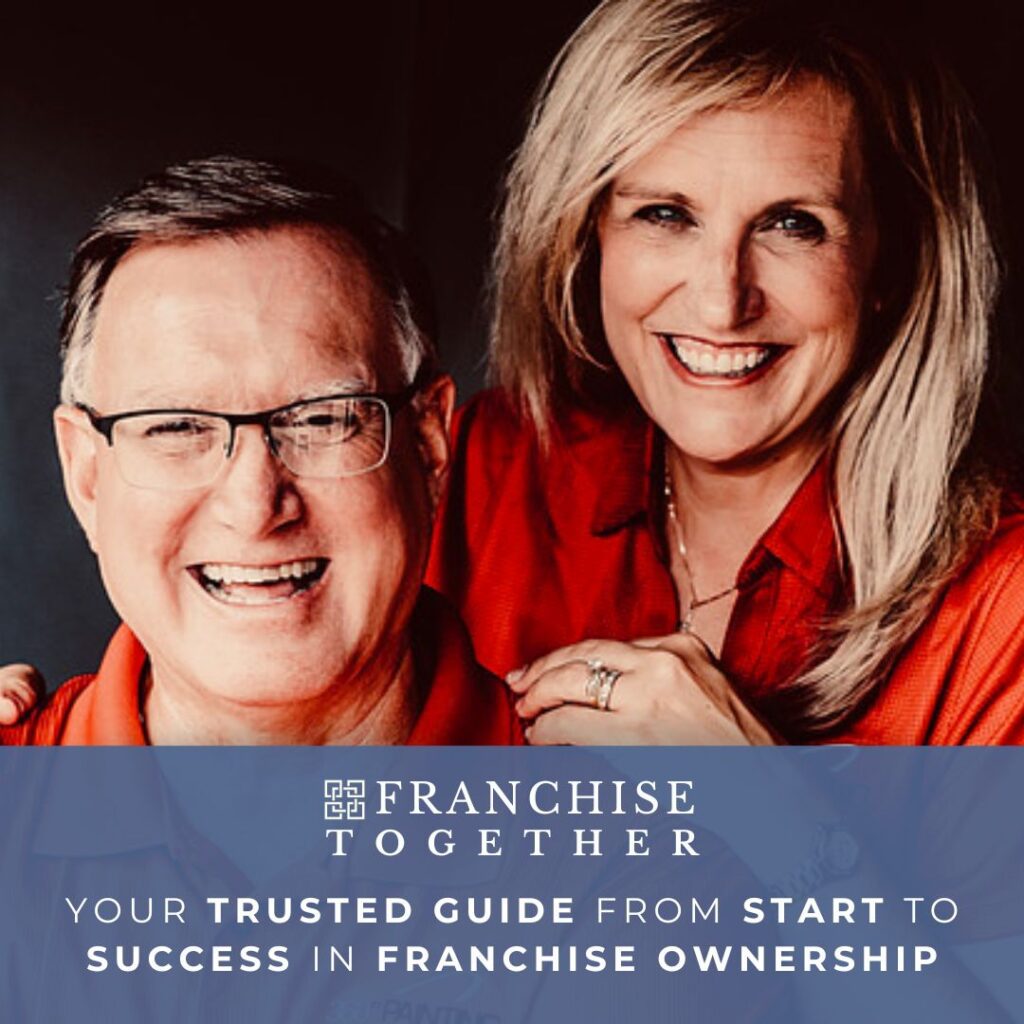
How We Help You Get Started:
At Franchise Together, we help aspiring entrepreneurs and professionals confidently explore franchise ownership. Through personalized guidance, education, and curated opportunities, we support you in finding a business that aligns with your goals, lifestyle, and financial vision.
Why Work With Us:
As a husband-and-wife team, we combine real-world franchise ownership experience with a passion for helping others succeed. We’ve been in your shoes navigating decisions, evaluating opportunities, and building businesses so we understand both the challenges and the possibilities. Our approach is hands-on, relationship-driven, and focused on helping you make informed, confident decisions.
Our Proven Process:
We take the time to understand your goals, background, strengths, and ideal lifestyle. From there, we guide you through a structured discovery process—introducing you to pre-screened franchise opportunities that match your vision and provide a realistic path to long-term success. Our role is to simplify the journey and give you clarity every step of the way.
Expert Guidance At No Cost To You:
Our services are free to you. We’re compensated by franchise partners for connecting them with qualified candidates, so you get expert guidance, insights, and support without paying out of pocket.
The Next Right Step:
If you’re curious about exploring franchising as a career pivot, investment vehicle or lucrative side hustle, let’s talk! You can book a free no obligation call with Mack or a free no obligation call with Sharon.