
One of the first questions I like to ask people who are considering franchise ownership is surprisingly simple:
What do you want this business to do for your life?
Not just, “How much money do you want to make?”
I’m talking about the bigger picture.
Do you want more control over your schedule? Are you hoping to eventually leave your corporate career? Do you want to build something with your spouse? Create more flexibility for your family? Build an asset for the future?
Those answers matter because owning a business simply for the sake of owning a business isn’t much of a goal.
You need to know what you’re working toward.
Mack and I learned that firsthand when we became franchise owners. We didn’t come into franchising simply looking for another job. We were looking for a different kind of life, and having clarity around what we wanted helped shape the decisions we made along the way.
That’s why I’m such a believer in setting goals.
But before we talk about where you’re going, I think there’s another important step.
Before You Look Forward, Look Back
Maybe it’s the former science teacher in me, but I believe there’s a lot to be learned from looking at the evidence.
Before setting your next goal, take some time to evaluate what’s already happened.
What worked?
What didn’t?
Where did you make progress?
Where did you get off track?
What surprised you?
And maybe most importantly, what did you learn about yourself?
This applies whether you’re already running a franchise or you’re just beginning to explore ownership.
Not every experience is going to feel like a win. That’s okay. Some of our most useful lessons come from things that didn’t go according to plan.
The point isn’t to beat yourself up over the past. It’s to learn from it.
Then you can make better decisions about what comes next.
A Simple Framework for Better Goals
One framework we’ve used for years is SMART goal-setting.
SMART stands for:
Specific. Measurable. Attainable. Relevant. Time-based.
You’ve probably heard of SMART goals before. They’re certainly not new.
But there’s a reason this framework has stuck around: it forces you to turn a vague idea into something you can actually work toward.
Let’s say you’re thinking about franchise ownership.
“I want to own a business someday” is a desire.
It’s not really a goal yet.
A stronger goal might be:
“I want to spend the next six months determining whether franchise ownership could allow me to transition out of my current career while creating more flexibility for my family.”
Now we have something to work with.
We can start asking questions.
What type of ownership model would fit your schedule?
How involved do you want to be in the day-to-day operation?
What are you comfortable investing?
What skills do you bring to the table?
What does “more flexibility” actually look like to you?
Those questions start turning an idea into a plan.
And that’s where good goal-setting becomes incredibly valuable.
Specific: Get Clear About What You Actually Want
One thing I’ve learned from working with prospective franchise owners is that people often know what they don’t want before they know what they do want.
They don’t want another 60-hour workweek.
They don’t want to spend the next ten years climbing a corporate ladder.
They don’t want their income or future completely controlled by someone else’s decisions.
That’s a starting point.
But eventually, we need to turn those frustrations into something more specific.
What do you want your life to look like?
What role do you want to have in the business?
How much time do you realistically want to devote to it?
What kind of business fits your strengths?
The clearer you can become about those answers, the easier it becomes to evaluate opportunities.
Measurable: Give Yourself Something to Track
A goal also needs some way of telling you whether you’re making progress.
If you’re exploring franchise ownership, your measurements might involve completing certain parts of your research by specific dates, evaluating your financial readiness, talking with franchise owners, reviewing the Franchise Disclosure Document, or completing other pieces of due diligence.
If you’re already a franchise owner, your measurements may involve customers, staffing, marketing activity, operational performance, or other numbers that matter to your particular business.
The specific metric isn’t the point.
The point is that you shouldn’t have to guess whether you’re moving forward.
Attainable: Ambitious Doesn’t Mean Unrealistic
I believe in setting goals that stretch you.
But there’s a difference between a goal that challenges you and one that ignores reality.
Your goals need to account for your finances, your time, your responsibilities, your skills, and the resources available to you.
That’s especially important when you’re evaluating a franchise.
It’s easy to get excited about an opportunity. Part of good due diligence is slowing down long enough to ask whether the opportunity actually fits your circumstances.
That’s one of the reasons we spend so much time getting to know our clients before we ever start talking about specific franchise brands.
The goal isn’t to find a franchise.
It’s to determine whether we can find the right fit for you.
Relevant: Don’t Lose Sight of Your “Why”
This may be my favorite part of the SMART framework.
A goal can be specific, measurable, attainable, and time-based and still be the wrong goal.
Why?
Because it may not be relevant to the life you’re actually trying to build.
I’ve seen how easy it is in business to get caught up in numbers, growth, territories, employees, and the next milestone.
Those things matter.
But they aren’t the whole story.
Your business should support the larger goals you’ve established for your life.
That’s why we continually bring people back to their “why.”
Why are you considering business ownership in the first place?
Your answer becomes a filter for the decisions that follow.
Time-Based: Put a Date on It
“Someday” is very easy to postpone.
A timeframe creates accountability.
That doesn’t mean you rush an important decision. In fact, when it comes to franchise ownership, we’re big believers in doing the opposite.
Education and due diligence come before commitment.
But having a timeframe keeps you moving intentionally.
Maybe your goal is to determine within the next six months whether franchise ownership is right for you.
Great.
Now you can work backward and identify what you need to learn, who you need to talk with, what financial questions need to be answered, and what decisions need to be made along the way.
You’re no longer just dreaming about something.
You’re investigating it.
Your Goals Will Change as Your Business Changes
Goal-setting doesn’t stop when you sign a franchise agreement.
In many ways, that’s when it becomes even more important.
When you’re launching, your goals may center around learning the systems, building your team, finding customers, and establishing good operating habits.
Once the business becomes more established, your goals change.
Now you may be thinking about developing employees, improving efficiencies, strengthening your culture, expanding your customer base, or eventually adding another territory.
And here’s something I think business owners need to hear:
Don’t get so busy working that you stop looking at where you’re going.
It’s easy to put your head down and work.
We’ve all done it.
But regularly looking at your numbers, reviewing your goals, and paying attention to trends gives you an opportunity to make adjustments before small problems become bigger ones.
Sometimes the goal needs to change.
That’s not failure.
That’s leadership.
Success Starts With Knowing What Success Means to You
There isn’t one definition of franchise success.
For one person, success may mean building a large multi-unit operation.
For someone else, it may mean owning one strong business that provides the lifestyle and flexibility they were looking for.
Neither is automatically better.
What matters is whether the business aligns with your goals, your strengths, your financial situation, and the life you want to build.
That’s also how Mack and I approach franchise consulting.
We don’t begin with a franchise brand and try to convince you that it fits.
We begin with you.
We spend time understanding what you’re looking for, what matters to you, what you want your role to look like, and what you’re hoping business ownership will make possible.
Then we can begin exploring opportunities through that lens.
Because making a smart franchise decision isn’t about moving quickly.
It’s about getting clear, asking good questions, doing your homework, and making an informed decision you can feel confident about.
If franchise ownership is one of the goals you’re considering, we’d be happy to help you explore it.
Our consulting is free to you, and there’s no obligation to move forward. Our role is to educate you, guide you through the process, and help you determine whether there’s a franchise opportunity that truly fits.
Let’s talk about what you want your next chapter to look like.
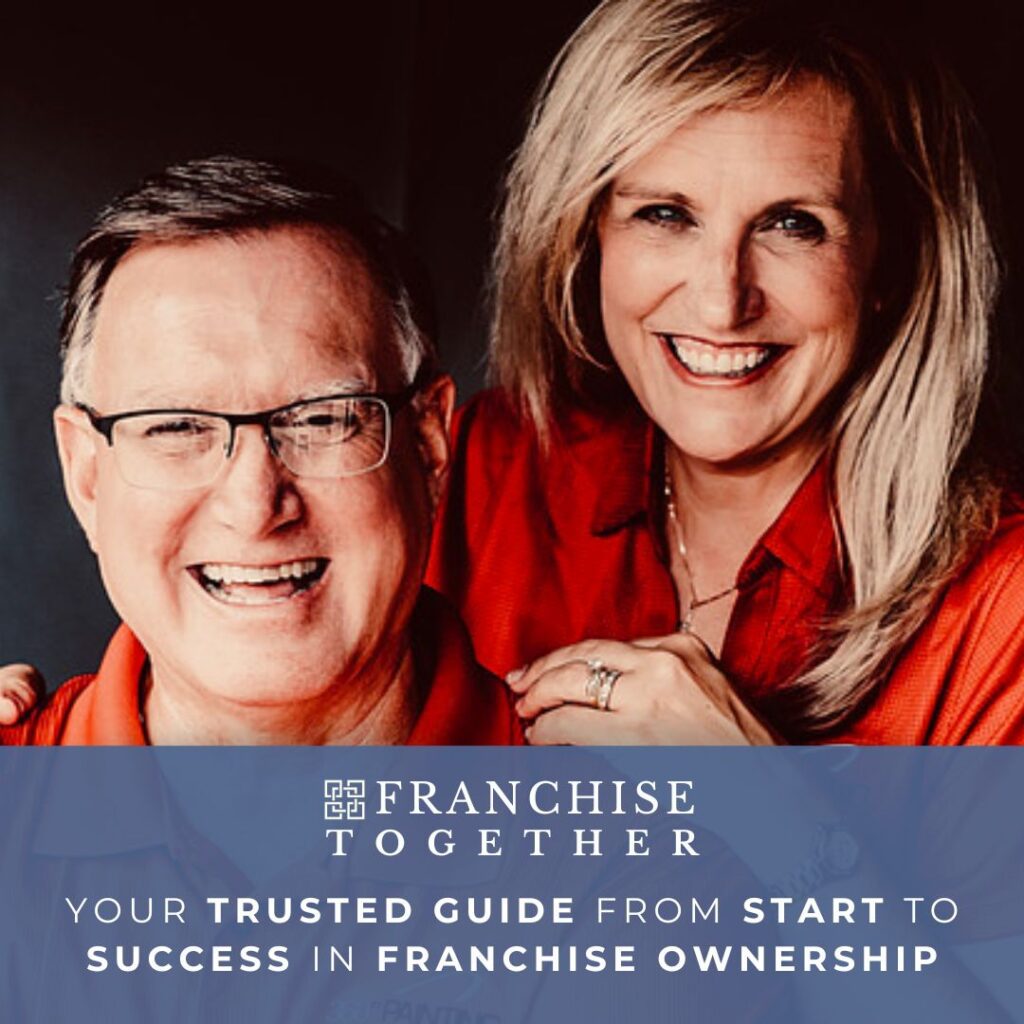
How We Help You Get Started:
At Franchise Together, we help aspiring entrepreneurs and professionals confidently explore franchise ownership. Through personalized guidance, education, and curated opportunities, we support you in finding a business that aligns with your goals, lifestyle, and financial vision.
Why Work With Us:
As a husband-and-wife team, we combine real-world franchise ownership experience with a passion for helping others succeed. We’ve been in your shoes navigating decisions, evaluating opportunities, and building businesses so we understand both the challenges and the possibilities. Our approach is hands-on, relationship-driven, and focused on helping you make informed, confident decisions.
Our Proven Process:
We take the time to understand your goals, background, strengths, and ideal lifestyle. From there, we guide you through a structured discovery process—introducing you to pre-screened franchise opportunities that match your vision and provide a realistic path to long-term success. Our role is to simplify the journey and give you clarity every step of the way.
Expert Guidance At No Cost To You:
Our services are free to you. We’re compensated by franchise partners for connecting them with qualified candidates, so you get expert guidance, insights, and support without paying out of pocket.
The Next Right Step:
If you’re curious about exploring franchising as a career pivot, investment vehicle or lucrative side hustle, let’s talk! You can book a free no obligation call with Mack or a free no obligation call with Sharon.